

Joan Jett and the Blackhearts - I Love Rock 'N Roll
"I Love Rock 'N Roll" is a rock song originally written and recorded by the Arrows in 1975. However, it was Joan Jett and the Blackhearts' 1981 cover that became the most famous rendition of the song. Joan Jett's version features her powerful vocals and a hard-rocking sound that helped define her career and solidify her place as a rock icon.
Released as a single in 1982, "I Love Rock 'N Roll" topped the Billboard Hot 100 chart for seven weeks, becoming one of the biggest hits of that year. The song's catchy chorus and energetic guitar riff, along with Joan Jett's rebellious persona, resonated strongly with audiences and contributed to its enduring popularity.
"I Love Rock 'N Roll" is often considered a classic anthem of rock music, celebrated for its bold attitude and unapologetic embrace of the genre. Joan Jett's rendition continues to be played widely on radio stations, featured in movies, and performed at concerts, maintaining its status as a timeless rock classic.
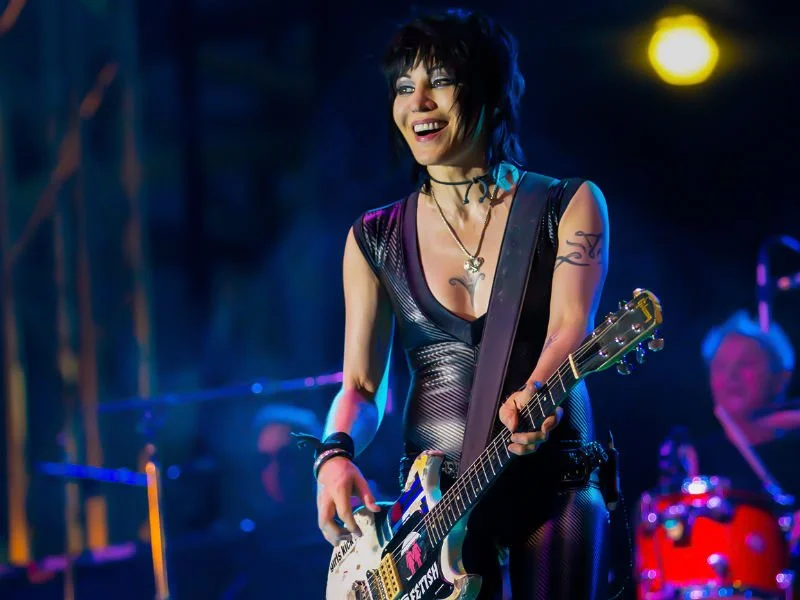
Joan Jett and The Blackhearts - Season of the Witch
Joan Jett’s rendition of Season of the Witch captures the raw, gritty energy that defines her signature rock sound while honoring the eerie mystique of Donovan’s original 1966 track. Her version adds a harder, more aggressive edge, driven by distorted guitars and her unmistakable vocals, transforming the psychedelic folk tune into a rebellious rock anthem. Jett leans into the song's haunting atmosphere with a sense of defiance, amplifying the themes of transformation and unease that the lyrics evoke. The result is a compelling interpretation that feels both nostalgic and refreshingly bold, highlighting Jett’s ability to reinvent classic tracks through her powerful, unapologetic style.

Judy Garland - Have Yourself A Merry Little Christmas
"Have Yourself a Merry Little Christmas" is a beloved Christmas classic performed by Judy Garland. It was introduced in the 1944 film Meet Me in St. Louis, in which Garland played the role of Esther Smith. The song was written by Hugh Martin and Ralph Blane, and it quickly became one of the most enduring holiday tunes.
The original lyrics were somewhat melancholic, reflecting the bittersweet themes in the film, where Garland's character is trying to comfort her younger sister during a difficult time. The original version of the song includes the lines:
"Have yourself a merry little Christmas,
It may be your last.
Next year we may all be living in the past."
However, after the song became popular, the lyrics were revised to be more hopeful, particularly after Garland requested changes that made the song feel more optimistic. The revised lyrics (the version most commonly heard today) include:
"Have yourself a merry little Christmas,
Let your heart be light.
Next year all our troubles will be out of sight."
Garland's warm and heartfelt performance of the song in the film, accompanied by her emotional delivery, made it an instant classic. Over time, many artists have covered the song, including Frank Sinatra, who also recorded a version with slightly altered lyrics, as well as more modern renditions by artists like Sam Smith and Michael Bublé.
"Have Yourself a Merry Little Christmas" has remained a staple of Christmas music due to its nostalgic, heartfelt tone, and its ability to evoke both warmth and reflection, making it a favorite during the holiday season.


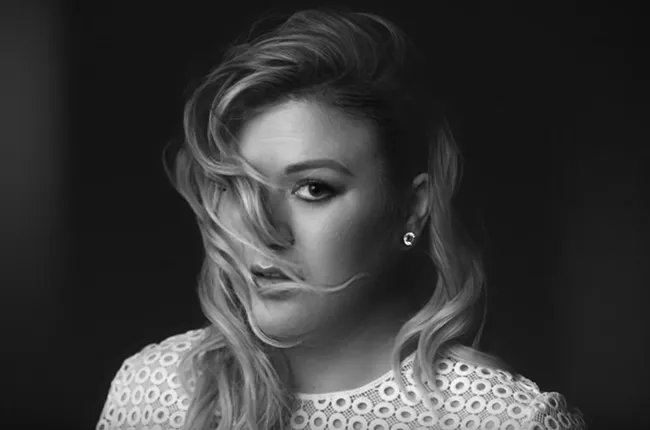
Kelly Clarkson - Piece By Piece
Kelly Clarkson’s “Piece by Piece” is an emotional song about abandonment, healing, and rebuilding trust. In the lyrics, Clarkson reflects on the pain of being left by her father while contrasting that experience with the love and support she receives from her husband and children. The song shows how painful memories can shape a person’s understanding of relationships, but it also emphasizes that love and security can gradually repair those wounds.
The song was released in 2015 as the title track from Clarkson’s seventh studio album, Piece by Piece. It represented a more personal and reflective side of her songwriting. While Clarkson had become known for powerful pop anthems and strong vocal performances, this song focused on family history and the complicated emotions connected to forgiveness, disappointment, and becoming a parent.
“Piece by Piece” begins with a gentle, piano-centered arrangement that allows Clarkson’s voice and lyrics to remain at the center. As the song develops, the production becomes fuller and more dramatic, matching the rising intensity of her emotions. Her vocal performance moves from quiet reflection to a powerful expression of both pain and gratitude, creating a strong contrast between the sadness of her past and the hope she finds in her present life.
The song gained even greater attention after Clarkson performed it on American Idol in 2015. Her emotional delivery made the performance widely remembered and introduced the song to an even larger audience. “Piece by Piece” continues to connect with listeners because it presents family relationships honestly, acknowledging that healing is not always simple. Ultimately, the song is about rebuilding a sense of love and belonging one step at a time.

Lady Gaga - Speechless
“Speechless” is a rock power ballad by Lady Gaga, released on November 18, 2009, as part of her extended play The Fame Monster. The song was written to convey her “fear of death” and implore her father to have the open-heart surgery needed for his condition. Gaga wrote the song while on tour during a depressive period, explaining that it’s about phone calls with her father, who would call after drinking, leaving her speechless as she feared losing him and not being there. Her father, Joseph, had the heart operation on October 22, 2009, just weeks before the album’s release. The track marked a significant departure from Gaga’s typical dance-pop style, featuring piano-driven instrumentation, live guitar, bass, and drums recorded at Record Plant Studios in Los Angeles. The song is a rock power ballad with influences of 1970s rock, blues rock, glam rock and country music. Critics noted her raw, raspy vocal delivery, with some comparing her performance to Freddie Mercury and Queen’s dramatic rock ballads. The song received mixed critical reception—while many praised its emotional depth and vocal power, some viewed it as a weaker moment compared to her electro-pop hits. Despite not being released as a single, “Speechless” became a fan favorite and a staple of her live performances, including a memorable 2010 Grammy Awards performance where she sang it as a medley with Elton John.

Lauryn Hill - Doo Wop (That Thing)
"Doo Wop (That Thing)" is one of Lauryn Hill's most iconic songs, released as the lead single from her debut solo album The Miseducation of Lauryn Hill in 1998. The song blends hip-hop, R&B, and soul, and became a massive commercial hit, reaching No. 1 on the Billboard Hot 100 chart.
The lyrics of the song address themes of self-respect, materialism, and the pressures of societal expectations, particularly around gender and relationships. Hill's delivery mixes rapping with soulful singing, and the track's message is both empowering and cautionary.
The song's infectious beat, which incorporates a vintage doo-wop sound, was produced by Lauryn Hill herself. The song's popularity, as well as its socially conscious message, cemented Hill's place as one of the most important artists of the late '90s and beyond. "Doo Wop (That Thing)" remains a key part of Hill's legacy as both a musical innovator and a voice of empowerment.

Lesley Gore - You Don't Own Me
Released in late 1963, You Don't Own Me stands as one of the most significant milestones in the history of pop music, marking a sharp departure from the teenage melodrama that characterized the early 1960s. At only seventeen years old, Lesley Gore recorded the track under the guidance of producer Quincy Jones, who had previously helped her reach the top of the charts with the bubblegum classic It's My Party. While her earlier hits often centered on the anxieties of teenage romance and the approval of boys, this new recording presented a startlingly mature and assertive persona. The song eventually climbed to number two on the Billboard Hot 100 in early 1964, famously held back from the top spot only by the arrival of The Beatles and their hit I Want to Hold Your Hand.
The song was composed by the Philadelphia songwriting duo John Madara and David White, who were consciously attempting to subvert the passive role usually assigned to female singers in that era. Frustrated by the prevalence of songs that depicted women as victims of unrequited love or subservient partners, they set out to write a "telling off" song. Madara has since noted that the spirit of the track was deeply influenced by his own experiences in the civil rights movement, particularly the injustices he witnessed in the American South. This background infused the lyrics with a broader sense of resistance against systemic oppression, transforming a personal declaration of independence into a universal anthem for human dignity and fair treatment.
Musically, the song is structured to reflect its emotional journey, beginning in a somber minor key during the verses before shifting into a triumphant major key for the chorus. This modulation creates a physical sense of "lift" and liberation that mirrors the lyrical themes. The song is notable for its use of strictly declarative sentences, leaving no room for ambiguity or questioning. By asserting that she is not a "toy" and refusing to be "put on display," Gore challenged the prevailing social double standards of the time. The recording process itself was a testament to her growing agency; after hearing the songwriters play the track in a hotel cabana, she insisted on recording it immediately, recognizing its potential to allow her more vocal and personal freedom.
Over the decades, the legacy of the song has only grown, finding new life in various cultural contexts. It became a centerpiece of the 1996 film The First Wives Club, where a performance by Bette Midler, Diane Keaton, and Goldie Hawn introduced the anthem to a new generation. It has been covered by a diverse array of artists, including Dusty Springfield, Joan Jett, and most recently the Australian singer Grace, whose 2015 version was also produced by Quincy Jones. Each iteration has reinforced the song's status as a foundational text of feminist empowerment, adaptable to the evolving struggles for gender equality and bodily autonomy.
In the final years of her life, Lesley Gore embraced the song's political dimensions more explicitly. After coming out as a lesbian in 2005, she noted that the lyrics took on a deeper personal resonance regarding her own identity and her three-decade relationship with partner Lois Sasson. In 2012, she repurposed the song for a public service announcement encouraging women to vote and protect their reproductive rights, remarking that the same battles for independence she sang about as a teenager were still being fought decades later. Following her death in 2015, the song remains a powerful symbol of the Me Too movement and the ongoing pursuit of self-determination, proving that its message of autonomy is as relevant today as it was in the winter of 1963.

Linda Perry - Beautiful
“Beautiful” is a song written by Linda Perry and made famous by Christina Aguilera. It was released in 2002 on Aguilera’s album Stripped. Perry, who had previously been the lead singer of 4 Non Blondes, wrote the song as a deeply personal reflection on insecurity and self-acceptance. Originally, she intended to record it herself, but after hearing Aguilera sing the demo vocals, Perry felt that Aguilera’s emotional performance captured the heart of the song and decided it should remain in her hands. In 2026, Linda Perry released her own version to the delight of her fans.
“Beautiful” became one of Aguilera’s signature songs, praised for its stripped-down production and powerful message about inner beauty and resilience in the face of criticism. The ballad was especially impactful within LGBTQ+ communities due to its inclusive lyrics and music video, which portrayed individuals facing judgment and finding self-worth. The song achieved major commercial success worldwide and won a Grammy Award for Best Female Pop Vocal Performance in 2004. Over time, it has remained an enduring anthem of self-empowerment and is widely regarded as one of the most influential pop ballads of the early 2000s.
“Beautiful” became one of Aguilera’s signature songs, praised for its stripped-down production and powerful message about inner beauty and resilience in the face of criticism. The ballad was especially impactful within LGBTQ+ communities due to its inclusive lyrics and music video, which portrayed individuals facing judgment and finding self-worth. The song achieved major commercial success worldwide and won a Grammy Award for Best Female Pop Vocal Performance in 2004. Over time, it has remained an enduring anthem of self-empowerment and is widely regarded as one of the most influential pop ballads of the early 2000s.

Linda Ronstadt – Goodbye My Friend
Linda Ronstadt's "Goodbye My Friend" serves as the poignant closing track of her critically acclaimed 1989 album, Cry Like a Rainstorm, Howl Like the Wind. While the album is widely celebrated for its powerhouse duets with Aaron Neville, this final ballad offers a stark contrast through its quiet, reflective nature and profound emotional resonance. Written by the esteemed singer-songwriter Karla Bonoff, the song was originally composed as a personal tribute to a beloved pet that had passed away. Bonoff initially intended the piece to be a private outlet for her own grief, yet its universal themes of loss and the enduring power of memory allowed it to transcend its specific origins, becoming a source of catharsis for listeners navigating the departure of friends and family members.
The collaboration between Ronstadt and Bonoff was a long-standing and fruitful partnership, with Ronstadt having interpreted many of Bonoff's compositions since the 1970s. In "Goodbye My Friend," Ronstadt demonstrates a remarkable degree of vocal restraint, moving away from the high-energy belts of her earlier career toward a more mature and nuanced delivery. Her performance is characterized by a sense of controlled sorrow, where the strength of the song lies in what is withheld rather than what is overtly performed. This approach allows the simple, conversational lyrics to carry the weight of the narrative, emphasizing the bittersweet reality of saying farewell to someone who has been a constant presence through the years.
Positioned at the end of an album filled with lush production and dramatic vocal displays, the song acts as an emotional exhale, grounding the record in a moment of intimate truth. The arrangement is intentionally sparse, providing ample space for Ronstadt's clear, centered tone to resonate without being overshadowed by instrumentation. This deliberate simplicity highlights the song's core message: that while physical parting is inevitable, the shared history and affection between individuals provide a lasting comfort that can eventually ease the pain of loss. Over time, the track has secured its place as one of the most enduring and respected ballads in Ronstadt's extensive catalog, valued for its dignity, exactness, and the deep sense of recognition it offers to anyone who has experienced the finality of a long-term friendship.

Lola Young - Messy
Lola Young’s “Messy” comes at you like a late‑night text you shouldn’t read but you do anyway—one minute she’s spilling frustration, the next she’s begging for grace, smoking like a chimney, pulling a Britney, texting back too late, hating how she “should die lucky at thirty‑three,” and you feel both ashamed and relieved she said it first. It’s soul‑pop meets 90s edge meets ADHD chaos—embracing being too messy, too clean, too perfect till she opens her mouth and a thousand versions of herself and none are enough. She’s calling out someone who told her to “get a job,” then moaned where she’d been, crying only on schedule, drinking wine at strange hours, and still feeling absurd for just being real. Every contradiction in the chorus hits like a kitchen drawer that won’t close—imperfectly authentic. TikTok exploded, Sofia Richie danced, charts fell—UK, Australia, Ireland, Germany, number 14 in the US—and it’s not that the song was made for virality, it just is viral, because imperfect truth resonates. And Lola—BRIT School grad, niece of Julia Donaldson?—spoke for every scattered, raw, unfiltered feeling you’ve ever had but couldn’t say. Now nominated for Ivor Novello, topping charts, dominating streaming—because being messy is how she won. 🌪️

Malvina Reynolds - Little Boxes
"Flowers" is a song by Miley Cyrus that was released in early 2023 as part of her album "Endless Summer Vacation." The track quickly gained popularity and became a significant hit, resonating with listeners for its empowering themes and catchy melody. Lyrically, "Flowers" explores themes of self-love and independence, with Cyrus reflecting on the importance of finding strength within oneself after a relationship. The song's anthemic chorus and upbeat production make it an uplifting track, encouraging listeners to prioritize their own happiness and well-being. The release of "Flowers" was strategically timed, coinciding with Cyrus's personal journey and growth. It is often interpreted as a personal statement, showcasing her evolution as an artist and individual. The song has been praised for its relatable message and has solidified Cyrus's place in contemporary pop music.

Madonna - Live To Tell
Madonna’s “Live to Tell” was released on March 26, 1986. It served as the lead single from the soundtrack of the film At Close Range and was later included on her third studio album, True Blue, released in June 1986. Madonna’s “Live to Tell” is a deeply emotional song about secrecy, suffering, betrayal, and the courage to survive difficult experiences. Its slow tempo, haunting melody, and gentle vocal delivery create a serious and reflective atmosphere. Instead of presenting strength through anger or confrontation, Madonna conveys it through quiet endurance and emotional control. The song’s speaker appears to carry painful memories that cannot easily be shared, suggesting that silence can sometimes be a way of protecting oneself. At the same time, the desire to reveal the truth shows the importance of honesty and personal expression. The song explores how hidden experiences can shape a person’s identity and relationships, while also emphasizing the possibility of healing through acceptance. Madonna’s restrained performance makes the emotion feel personal and sincere, allowing listeners to connect with the themes of vulnerability and resilience. Overall, “Live to Tell” presents survival as a form of strength and suggests that facing the truth, even when it is painful, can help a person regain control over their life.
